Industry 4.0 manufacturing is transforming how industrial companies design, produce, and scale their operations. Instead of relying on isolated machines and manual processes, manufacturers now adopt connected systems, real-time data, and intelligent automation. As a result, factories become more efficient, flexible, and competitive in global markets such as Canada, the United States, and Europe.
Moreover, Industry 4.0 is no longer limited to large corporations. Today, medium-sized manufacturers and industrial suppliers increasingly integrate smart technologies to improve quality, reduce costs, and accelerate time to market.
What Is Industry 4.0 Manufacturing?
Industry 4.0 refers to the fourth industrial revolution. It combines digital technologies, automation, and data exchange across manufacturing environments.
Specifically, Industry 4.0 manufacturing relies on:
Industrial Internet of Things (IIoT)
Smart sensors and connected devices
Cloud computing and edge computing
Artificial intelligence (AI) and machine learning
Advanced robotics and automation systems
Together, these technologies enable machines, systems, and people to communicate seamlessly. Consequently, manufacturers gain better visibility, faster decision-making, and higher operational control.
Key Technologies Driving Industry 4.0
1. Industrial Internet of Things (IIoT)
First, IIoT connects machines, tools, and production lines through sensors and networks. These devices continuously collect performance data. Therefore, manufacturers can monitor operations in real time and detect issues before failures occur.
2. Automation and Smart Robotics
Next, smart automation improves precision and consistency. Unlike traditional automation, Industry 4.0 systems adapt to changing conditions. As a result, production becomes more flexible and scalable.
3. Data Analytics and Artificial Intelligence
Furthermore, advanced analytics transform raw data into actionable insights. AI-powered systems predict maintenance needs, optimize workflows, and improve product quality. Consequently, downtime and waste are significantly reduced.
4. Digital Twins
In addition, digital twins create virtual replicas of machines or production lines. Manufacturers can simulate processes, test improvements, and reduce risks before making physical changes.
Benefits of Industry 4.0 for Manufacturers
Industry 4.0 manufacturing delivers measurable advantages across the industrial value chain.
Higher productivity: Automated and connected systems reduce manual intervention.
Faster decision-making: Data-driven insights support strategic planning.
Greater supply chain resilience: Digital visibility improves coordination with suppliers.
Therefore, companies adopting Industry 4.0 gain a clear competitive edge in demanding B2B markets.
Industry 4.0 in the Canadian Manufacturing Sector
In Canada, Industry 4.0 manufacturing plays a strategic role in strengthening industrial competitiveness. Sectors such as automotive, electronics, energy, medical devices, and industrial equipment increasingly invest in smart factory technologies.
Additionally, Canadian manufacturers focus on:
Energy efficiency and sustainability
High-quality production standards
Integration with global supply chains
As a result, demand for reliable electronic components and industrial fasteners continues to grow, especially for automated and high-performance applications.
The Role of High-Quality Components in Smart Manufacturing
Industry 4.0 systems depend on reliable hardware. Without quality components, even the most advanced software cannot perform effectively.
For example:
Electronic components such as sensors, microcontrollers, connectors, and power devices enable data collection and automation.
Industrial fasteners ensure mechanical stability, vibration resistance, and long-term reliability in automated equipment.
Therefore, selecting the right components is critical for the success of any smart manufacturing project.
Supporting Industry 4.0 with Reliable Industrial Supply
At this point, partnering with a trusted B2B distributor becomes essential. Reliable sourcing ensures consistent quality, compliance with international standards, and timely delivery.
We support manufacturers and system integrators by supplying:
High-quality electronic components for automation and control systems
Robust industrial fasteners designed for demanding industrial environments
Competitive pricing and tailored solutions for B2B projects
If you are planning to upgrade your production systems or optimize your supply chain, we invite you to explore our product range, request a quote, and discover cost-effective solutions adapted to your industrial needs.

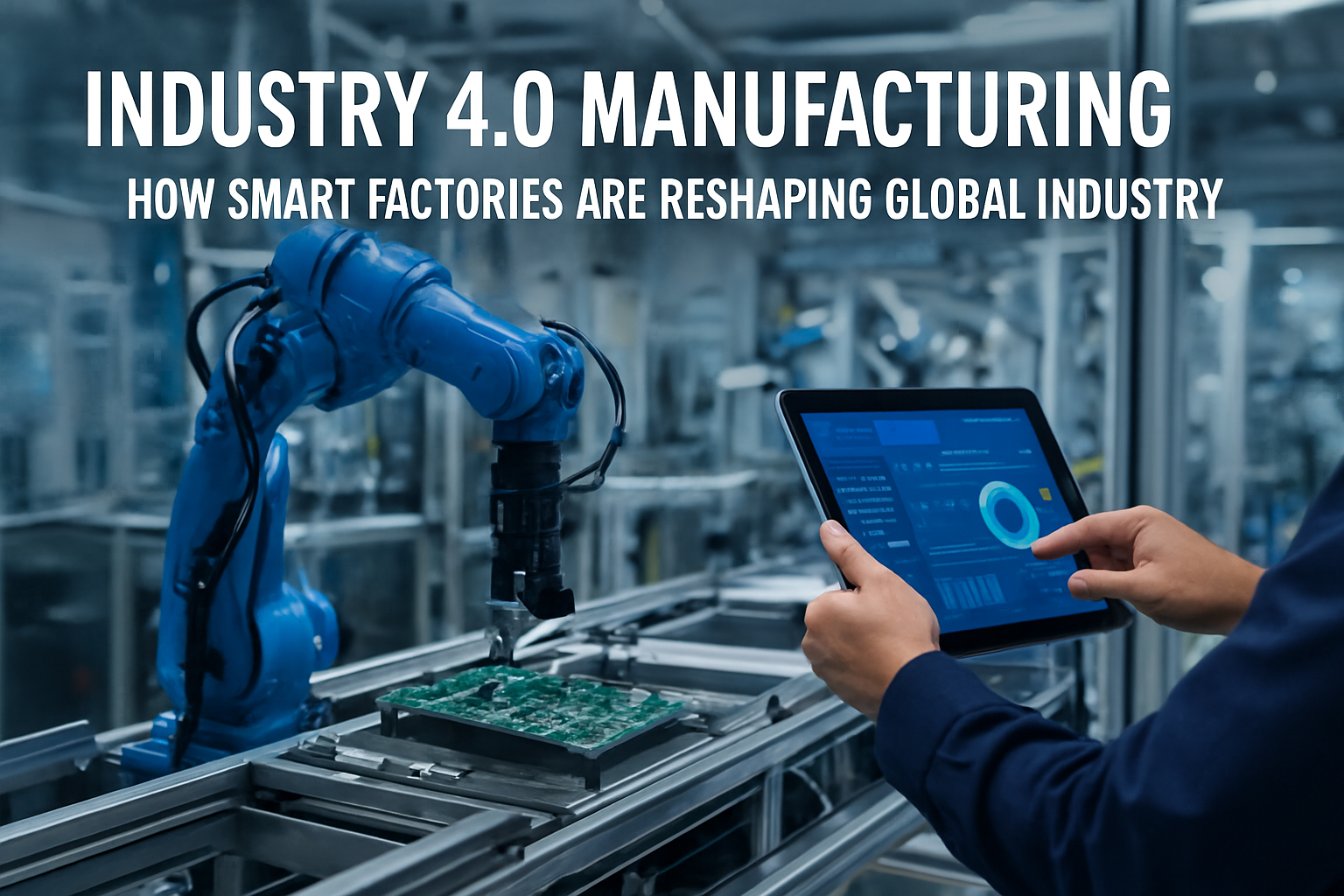

Why Industry 4.0 Manufacturing Is the Strategic Engine Behind Smart Industrial Growth
Introduction
Industry 4.0 manufacturing is transforming how industrial companies design, produce, and scale their operations. Instead of relying on isolated machines and manual processes, manufacturers now adopt connected systems, real-time data, and intelligent automation. As a result, factories become more efficient, flexible, and competitive in global markets such as Canada, the United States, and Europe.
Moreover, Industry 4.0 is no longer limited to large corporations. Today, medium-sized manufacturers and industrial suppliers increasingly integrate smart technologies to improve quality, reduce costs, and accelerate time to market.
What Is Industry 4.0 Manufacturing?
Industry 4.0 refers to the fourth industrial revolution. It combines digital technologies, automation, and data exchange across manufacturing environments.
Specifically, Industry 4.0 manufacturing relies on:
Together, these technologies enable machines, systems, and people to communicate seamlessly. Consequently, manufacturers gain better visibility, faster decision-making, and higher operational control.
Key Technologies Driving Industry 4.0
1. Industrial Internet of Things (IIoT)
First, IIoT connects machines, tools, and production lines through sensors and networks. These devices continuously collect performance data. Therefore, manufacturers can monitor operations in real time and detect issues before failures occur.
2. Automation and Smart Robotics
Next, smart automation improves precision and consistency. Unlike traditional automation, Industry 4.0 systems adapt to changing conditions. As a result, production becomes more flexible and scalable.
3. Data Analytics and Artificial Intelligence
Furthermore, advanced analytics transform raw data into actionable insights. AI-powered systems predict maintenance needs, optimize workflows, and improve product quality. Consequently, downtime and waste are significantly reduced.
4. Digital Twins
In addition, digital twins create virtual replicas of machines or production lines. Manufacturers can simulate processes, test improvements, and reduce risks before making physical changes.
Benefits of Industry 4.0 for Manufacturers
Industry 4.0 manufacturing delivers measurable advantages across the industrial value chain.
Therefore, companies adopting Industry 4.0 gain a clear competitive edge in demanding B2B markets.
Industry 4.0 in the Canadian Manufacturing Sector
In Canada, Industry 4.0 manufacturing plays a strategic role in strengthening industrial competitiveness. Sectors such as automotive, electronics, energy, medical devices, and industrial equipment increasingly invest in smart factory technologies.
Additionally, Canadian manufacturers focus on:
As a result, demand for reliable electronic components and industrial fasteners continues to grow, especially for automated and high-performance applications.
The Role of High-Quality Components in Smart Manufacturing
Industry 4.0 systems depend on reliable hardware. Without quality components, even the most advanced software cannot perform effectively.
For example:
Therefore, selecting the right components is critical for the success of any smart manufacturing project.
Supporting Industry 4.0 with Reliable Industrial Supply
At this point, partnering with a trusted B2B distributor becomes essential. Reliable sourcing ensures consistent quality, compliance with international standards, and timely delivery.
We support manufacturers and system integrators by supplying:
If you are planning to upgrade your production systems or optimize your supply chain, we invite you to explore our product range, request a quote, and discover cost-effective solutions adapted to your industrial needs.
Categories
Archives
Recent Post
Why Industry 4.0 Manufacturing Is the Strategic Engine Behind Smart Industrial Growth
13 December 2025Featured Product: The Rise of Smart Fasteners
18 May 2025